Social media age restrictions sport information - click here

Home

Main navigation

  • News & Media
  • Training
    • Member Protection Information Officers
    • eLearning & Scenarios
  • Campaigns
  • Issues & Complaints
    • Common Issues
    • Complaint Handling
    • Make a complaint or report
  • Templates & Resources
    • Templates
    • Resources
  • Search
  • Toggle

Breadcrumb

  1. Home
  2. News and Media
  3. Phoenix Basketball Club: Reimagining Community Sport
Case studies 04 Dec, 2025

Phoenix Basketball Club: Reimagining Community Sport

Phoenix Basketball Club began with a simple question: what if we could design sport from scratch?

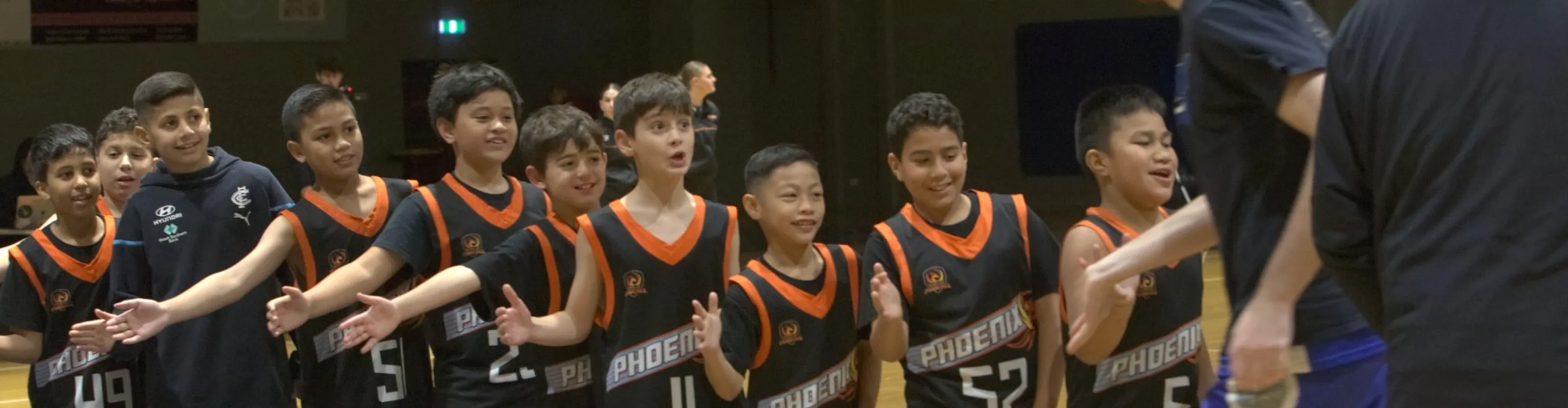
A junior Phoenix basketball team hold out their hands to give a passing coach a high-five

In an area where traditional structures had not met the needs of many families, Phoenix emerged as a strengths-led, community-driven response grounded in the lived experience, cultural richness and aspirations of local families.

Broadmeadows, Coolaroo and Dallas are among Victoria’s most culturally vibrant and resilient communities despite being among Melbourne’s most socially disadvantaged suburbs. Basketball’s popularity among local young people was evident, however participation rates were extremely low. Cost, lack of transport, cultural safety issues and the “hidden rules” of Australian sport meant that many families saw formal sport as something “for others”. Mothers, especially, described feeling overwhelmed – unsure of processes, unwelcome in traditional settings, and fearful their children would be embarrassed or excluded.

Supported by a VicHealth Jumpstart grant in 2023, Broadmeadows Basketball Association handed the reins to a youth committee of six 17–22 year-olds, all from the local area. These young leaders surveyed their peers, consulted primary and secondary schools, and engaged partner agencies like Banksia Gardens Community Services. They designed everything – from the name, colours and logo to a strategic plan. And in doing so, they sparked a community-led movement.

Two years later, Phoenix is now the fastest growing club in the local competition, with 22 teams and a waitlist that keeps growing.
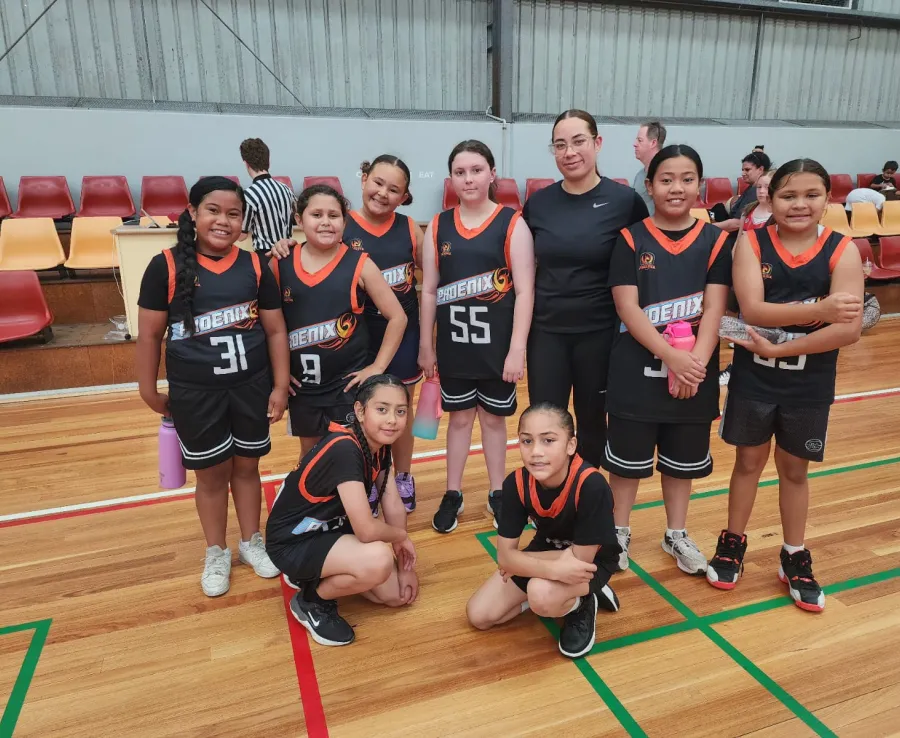
A Phoenix Basketball Club junior team poses with their coach

A Club That Reflects Its Community

In January 2025, Phoenix formed its first official committee - twelve community members, nine born overseas, ten women, and nine who speak a language other than English at home. This committee looks, sounds and lives like the families it serves. It continues the original vision of shifting power to those who have historically been excluded from decision-making in sport.

One of those leaders is Nabila, a coach, committee member and mother of three.

“Basketball changed everything for us,” Nabila says. “I was born overseas (in Etrea) and grew up loving basketball but was never able to play. When we came to Australia, I never imagined my children could be part of something like this. Phoenix made it possible. My daughter has grown in confidence - she even wrote and read out what Eid means to her at a club event. It has truly changed our lives.”

Experiences like this are not isolated—they reflect a broad pattern of increased confidence, connection and opportunity for families.

Another parent of five children shared that Phoenix was the first structured sport their children had ever joined. What made participation possible was not a single intervention, but the club’s consistent strengths-based approach: affirming cultural identity, removing practical barriers, connecting families to support when needed, and recognising every parent’s existing capabilities.

Phoenix’s membership now reflects the extraordinary diversity of the region, with families connected to Eritrea, Samoa, Iraq, Turkey, Pakistan, Sudan, Syria, India and beyond. What unites them is a shared desire for belonging, opportunity and a club that understands their strengths.

Nabila is at the 3 point line, about to shoot the ball into the hoop. She is wearing a red hijab, a red and black midi dress, black leggings and black sneakers.
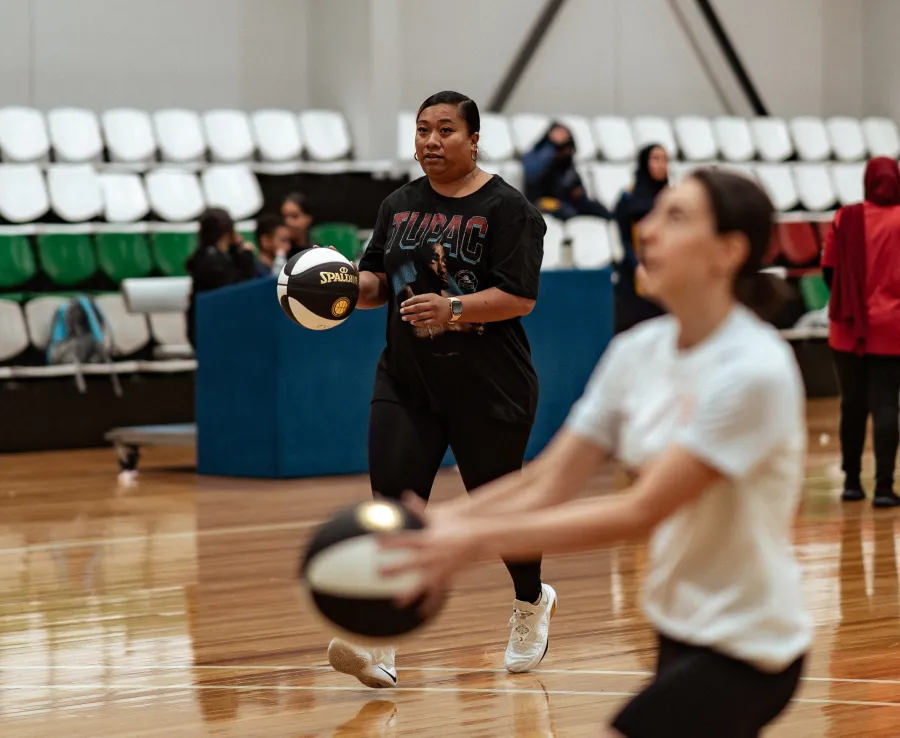
Two Phoenix players from the casual women's team practice on the court

Inclusive by Design – Training, Coaching and Club Culture

From day one, Phoenix made decisions through the lens of removing barriers.

Cost: Fees were kept low and subsidised through grants and fundraising. Uniform costs were reduced, walkover fines pre-empted and avoided, and families were protected from financial shocks that often deter new participants.

Transport: The club negotiated for all games to be played within a walkable precinct, recognising that many families have one parent moving multiple children or do not have cars.

Cultural safety: Coaches participated in healing-centred practice workshops and are regularly reminded of the importance of kids building confidence through sport. The priority became relational coaching - connection, care and emotional safety – not winning.

Upskilling mothers: Recognising that 88% of parents had never been involved in organised sport, Phoenix started a free women’s basketball program on Wednesday evenings. This was transformative - mothers who once felt disconnected from sport were now learning the game their children were learning, making friends, building confidence and being physically active themselves.

Volunteer support: Instead of presuming families understood scoring, uniforms, or protocols, Phoenix created step-by-step onboarding, peer support networks and multilingual assistance. The aim was not to force families to “fit in”, but to reshape the environment so they could succeed.

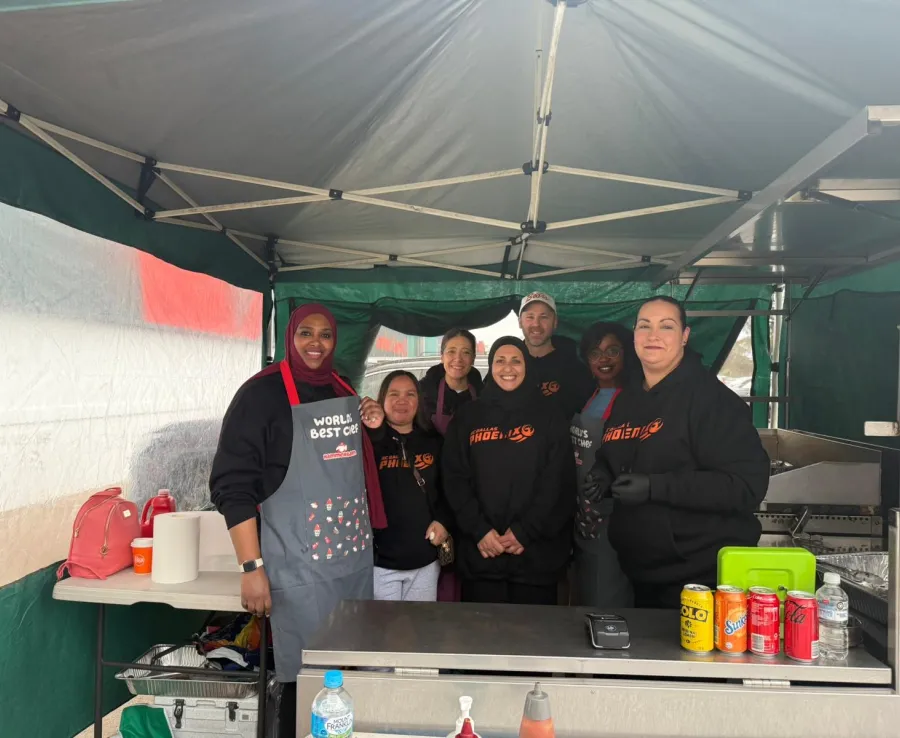
Phoenix Basketball Club members are volunteering at a Bunning sausage sizzle stall to raise funds for the club

Navigating Hidden Rules and Systemic Barriers

The club’s greatest challenge has been navigating the “hidden rules” of sport - protocols, expectations and cultural norms that long-time sport participants take for granted.

Things like:

  • knowing what score bench is and how to do it or even where to sit when you attend
  • understanding uniform rules
  • receiving official emails in English
  • being fined or penalised (wrong uniform, attending a game late)
  • volunteering expectations
  • understanding grading, fixtures, training blocks

For families new to Australian sport, these things can feel intimidating and punitive. Phoenix leaders have worked tirelessly - often as volunteers - to shield families from the sharp edges of the system while slowly building capacity within the group.

As the club continues to grow, new challenges - such as court space, scheduling within one precinct, volunteer burnout and maintaining low cost structures - are becoming more pressing. But the ethos remains: build slowly, intentionally, and with the community.

A Phoenix Basketball Club junior team poses with their coach

Key Lessons Learned

  1. Handing over control is the most powerful equity tool.
    When young people and culturally diverse community members are empowered to lead, programs become relevant, safe and sustainable.
  2. Accessibility must be designed, not assumed.
    Low cost, walkability, translated communication, flexible processes and cultural safety are not “nice to have” - they determine who can participate.
  3. Mothers are the key to long-term engagement.
    Investing in mothers - confidence, skills, belonging—creates stability for entire families.
  4. Healing centred coaching works.
    Rhythmic activity, predictable structure, warm coaching and relational connection have transformed confidence and emotional regulation in players.
  5. Change requires both innovation and resilience.
    Systemic barriers are real. Creating new norms is hard, slow and often exhausting - but profoundly impactful.


Advice for Others

Phoenix leaders offer a clear message to those wanting to create more inclusive sport:

“Do not be complicit in a system that excludes people. Sport is built on the premise of fairness and creating an even contest. That fairness must extend beyond the court. When clubs take even small steps to make participation truly accessible, the whole system becomes stronger. Inclusion is not an extra—it is the foundation. And when families feel they belong, everyone wins.” Sharin Milner, Club President.


Conclusion

Phoenix is more than a club - it is a blueprint for community-led sport in Australia. In less than two years it has gone from an idea to a thriving club with 22 teams, a diverse committee, and a model that is changing how sport can be delivered in culturally rich, economically challenged communities.

Its success shows what is possible when power is shared, when systems adapt to people - not the other way around - and when sport is used as a tool for belonging, safety, skill-building and hope.


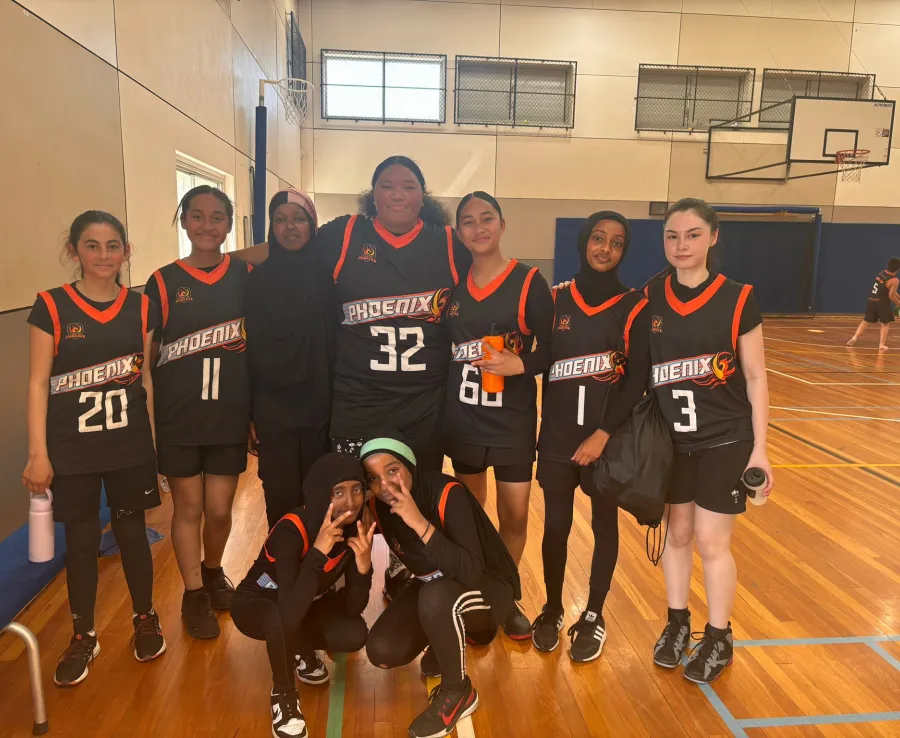
A Phoenix U16 girls team poses on the court
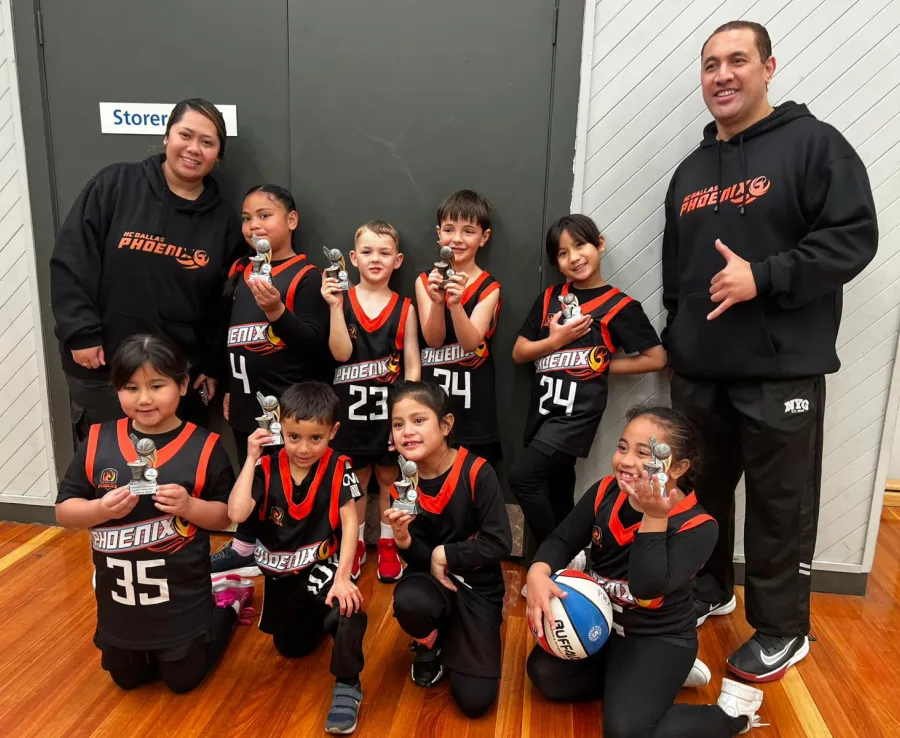
A team of junior Phoenix players pose with medals, flanked by their coaches, one of which is throwing a shaka
A young boy in a Phoenix jersey poses for the camera, holding up his hands in a Gen-Alpha style peace sign

Join a fast growing community of people committed to safe, fair and inclusive sport

logo-white

Subscribe

Follow us

Facebook Instagram LinkedIn

Footer

  • About us
  • Contact us
  • Sitemap
  • Privacy
  • Terms of Use
  • Promote PBTR
  • Accessibility

Follow us

Facebook Instagram LinkedIn
logo-white


Play by the Rules acknowledges the Australian Aboriginal and Torres Strait Islander peoples as the first inhabitants of the nation and the traditional custodians of the lands where our staff live, learn and work: the Wurundjeri people, Wathaurong people and Ngunnawal people.

flags

Play by the Rules is an LGBTIQ+ ally. Find out more.

lGBTQ flag